

Comet’s strategy to 2030
Scaling the focus strategy for the next phase of growth.
Following a comprehensive strategic review in 2025, Comet reaffirmed its core focus while meaningfully enhancing its strategy to reflect the profound changes in market conditions and business dynamics over recent years. While the overall direction remains unchanged, we have refined existing priorities and introduced new strategic elements to ensure continued competitiveness in an increasingly demanding environment.
The semiconductor industry has evolved rapidly, requiring Comet to become faster, more efficient, and more rigorously driven by lean processes, without compromising on quality. At the same time, we are strengthening our proximity to customers, deepening collaboration with leading semiconductor manufacturers, and aligning our organization even more closely with their exacting requirements.
Comet’s focus strategy
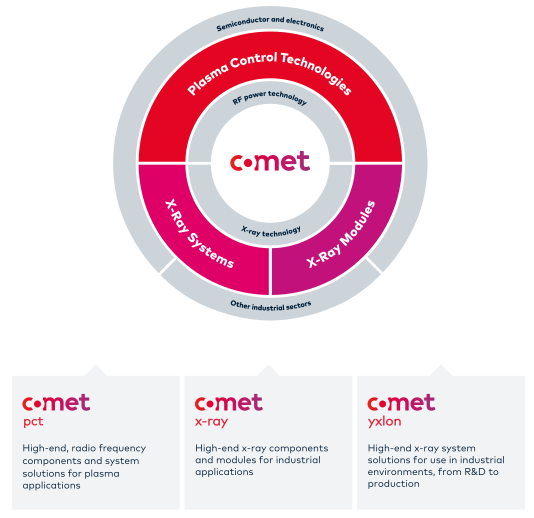
We are one company, developing two technologies – RF power and x-ray – in three divisions, with a primary focus on the semiconductor and electronics market
Entering a phase of accelerated expansion
The global semiconductor market is entering an accelerated growth phase, with industry forecasts pointing to annual revenue surpassing USD 1 trillion before 2030. This expansion is driven by structural trends including digitalization, electrification, and the rapid adoption of artificial intelligence (AI), cloud, and edge computing. AI and high-performance computing are emerging as primary demand drivers, requiring increasingly specialized logic and high-bandwidth memory (HBM) solutions to deliver superior performance and data throughput.
However, the rapid scaling of AI infrastructure has contributed to ongoing supply constraints in DRAM and NAND memory, with shortages expected to persist through and beyond 2026. These tight conditions have resulted from the strategic allocation of wafer capacity toward high-margin HBM production and unprecedented AI buildouts, leading to elevated memory pricing and supply imbalances across consumer and enterprise segments.
In response to evolving performance and efficiency requirements, the industry is advancing toward leading-edge process technologies. Semiconductor manufacturers have transitioned to 2-nanometer (2 nm) process technologies, incorporating gate-all-around (GAA) transistor architectures that offer significant gains in power efficiency and transistor density. This progression underlines the shift toward more complex, high-performance logic solutions demanded by AI and mobile computing.
At the same time, 3D advanced packaging technologies are becoming increasingly important. These approaches – including sophisticated interposers and chiplet-based designs – enhance performance and bandwidth while addressing thermal and integration challenges inherent in next-generation systems.
Comet is powering the semiconductor industry’s transformation
The persistent memory supply shortages and accelerating demand are catalyzing major capital investments in production capacity across the semiconductor ecosystem. Broadly, semiconductor companies are planning extensive plant investments through 2030, reflecting confidence in long-term growth and strategic efforts to secure capacity at advanced nodes. These expansions span traditional wafer fabs, memory-focused facilities and advanced packaging infrastructures, all critical to enabling next-generation semiconductor capabilities.
Strategic positioning across the semiconductor value chain
As semiconductor manufacturing becomes ever more complex, we continue to refine and enhance our strategy to remain aligned with the evolving needs of the industry. This ongoing fine-tuning expands access to emerging technologies and creates additional opportunities for both organic growth and targeted inorganic expansion. A strong and sustained emphasis on research and development remains central to this approach. Historically, Comet’s experience has shown that innovation cycles in this industry span multiple years from initial investment to commercial return, underscoring the importance of investing early to secure future competitiveness.
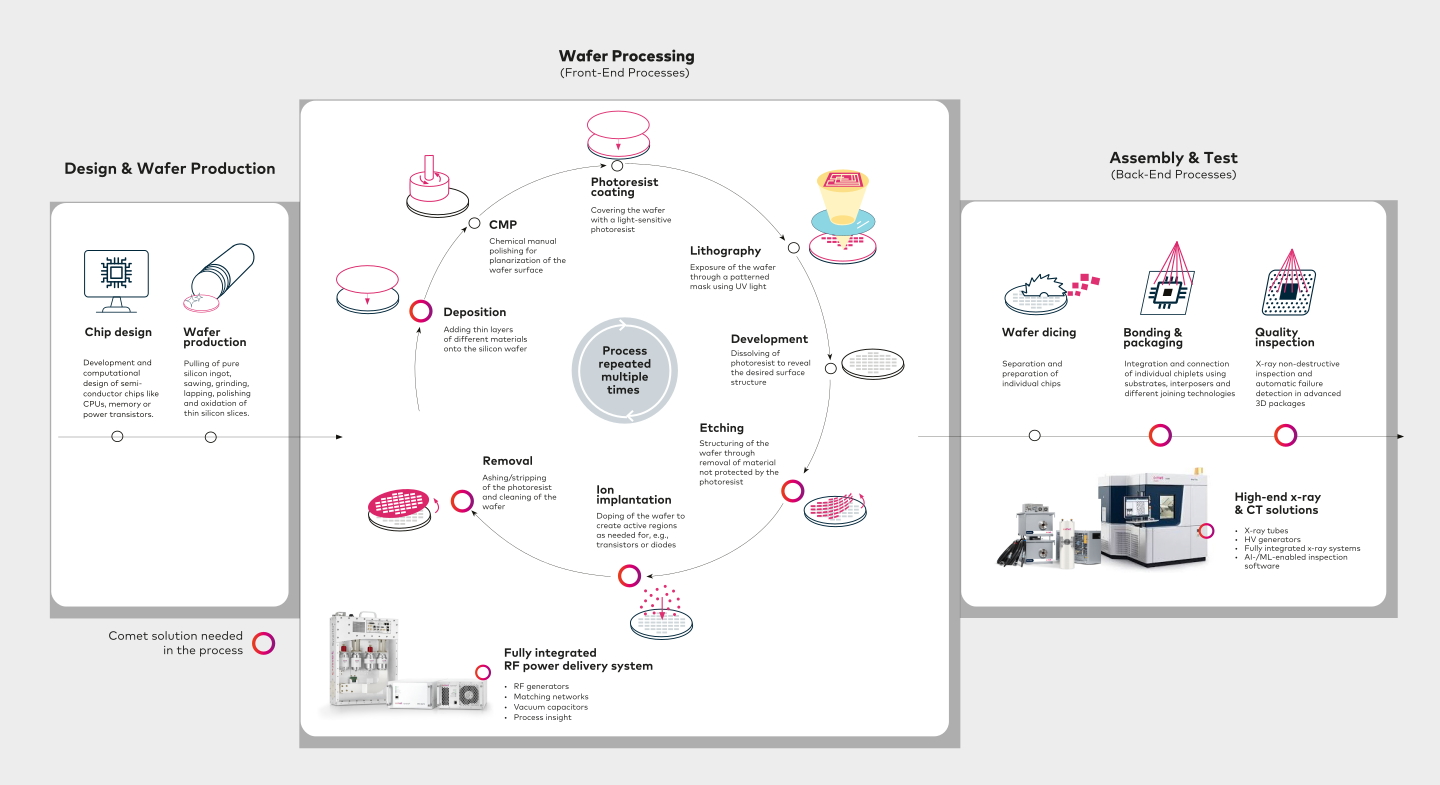
We are strategically positioned across critical segments of the semiconductor manufacturing value chain, providing differentiated technologies that support both front-end wafer fabrication and back-end inspection and testing. Through our Plasma Control Technologies (PCT) business, we are a preferred supplier of RF power delivery solutions to leading wafer equipment manufacturers, enabling stable and repeatable plasma processes essential for advanced semiconductor production. This directly embeds us in the capital expenditure cycles of major equipment OEMs. In the back end, our x-ray technologies address the rapidly growing inspection requirements associated with advanced packaging and increasing device complexity. X-ray modules and systems are deployed by leading foundries, integrated device manufacturers (IDMs), and outsourced semiconductor assembly and test providers (OSATs) to ensure yield, quality, and reliability at nanoscale precision.
This broad footprint across the semiconductor ecosystem provides us with diversified revenue exposure, early visibility into investment trends, and direct participation in structural growth drivers such as AI, advanced nodes, and advanced packaging. As the semiconductor market enters a new phase of technology-driven expansion, we will leverage our embedded position and long-term R&D commitment to drive sustainable growth and strengthen our role in customers’ long-term capital investment plans.
In addition to our strong positioning in semiconductor equipment, we are selectively expanding into adjacent industrial applications, creating new long-term growth opportunities. In particular, our x-ray technologies are increasingly applied in emerging areas such as battery manufacturing and safety testing, where non-destructive inspection is critical to quality, reliability, and large-scale production. These applications are supported by structural trends including electrification, automation, and advanced manufacturing.
By leveraging our core competencies in high-precision inspection and process technologies, we are broadening our addressable market while maintaining a clear focus on innovation-driven segments. This diversification complements our semiconductor exposure and enhances our participation in multiple technology investment cycles, strengthening our long-term growth profile.