

Environmental topics
Climate mitigation and adaptation
Climate change poses three main risks to Comet and our business activities: Natural hazards, such as flooding, storms or extreme heat, can cause infrastructure damage or unhealthy working conditions, which might lead to interruptions of our own operations. Beyond this, physical risk events may disrupt the supply chain, resulting in delays and failures in the delivery of purchased goods. Finally, Comet can face reputational and legal risks related to insufficient climate reporting.
At Comet we view climate mitigation and adaptation as essential to both reducing our own negative impacts and building the long-term resilience of our operations, value chain, and stakeholders. We are deeply committed to contributing our share to reducing emissions and, in doing so, playing an active role in the fight against climate change.
Climate-related risks and opportunities
Climate-related physical risks
Climate-related physical risks are typically categorized as either chronic or acute. Chronic physical risks refer to ongoing climate-related challenges, such as generally increased temperatures or persistent water shortages, whereas acute physical risks stem from sudden events like floods or severe storms. Physical risks can lead to direct financial impacts on Comet, including potential damage to company assets and business interruptions as well as supply chain disruptions. Therefore, such risks require protective measures and the allocation of financial resources to safeguard operations.
To methodically evaluate physical risk exposure for Comet’s own operations and supply chain, the company conducted a physical risk assessment using a specialized third-party software tool. The assessment covered both Comet’s own sites and a number of selected critical suppliers. The outcomes of the assessment are used to inform and update Comet’s established supplier risk management processes. As part of the recent supplier strategy, we mitigated supply-chain risk by diversifying our supplier base and reducing reliance on critical suppliers. This strategy has been gradually implemented in recent years and is a core element of strengthening Comet’s resilience to climate-related as well as geopolitical risks.
The assessment comprised site-specific evaluations of 12 relevant climate-related hazards under current conditions and for short- (2030), medium- (2040) and long-term (2050) time horizons. These projections were assessed using three commonly applied scenarios based on the framework of the Intergovernmental Panel on Climate Change (IPCC). The scenarios are combinations of socio-economic pathways (SSPs, e.g., SSP1) and so-called representative concentration pathways that identify the warming intensity by a decimal number (e.g., 2.6):
- Sustainability (SSP1-2.6): Global cooperation drives social justice and sustainable development, prioritizing education and poverty reduction. Innovation focuses on decarbonization and circular economy practices. Warming remains below 2°C by 2100.
- Middle-of-the-Road (SSP2-4.5): Development follows current trends with moderate growth and uneven wealth, while climate measures remain gradual. Energy supply mixes fossil and renewables, and societal change is slow. Warming reaches about 3°C by 2100.
- Fossil-Fueled Development (SSP5-8.5): Economic growth and high consumption dominate, powered by cheap fossil energy and weak global cooperation. Sustainability is sidelined as emissions rise continuously. Warming exceeds 4°C by 2100.
In considering physical risks, it is acknowledged that chronic and acute risks are often intertwined. For instance, acute extreme heat might come on top of chronically increasing temperatures. The following table highlights the top aggregated physical risks and their potential implications on Comet’s business model:
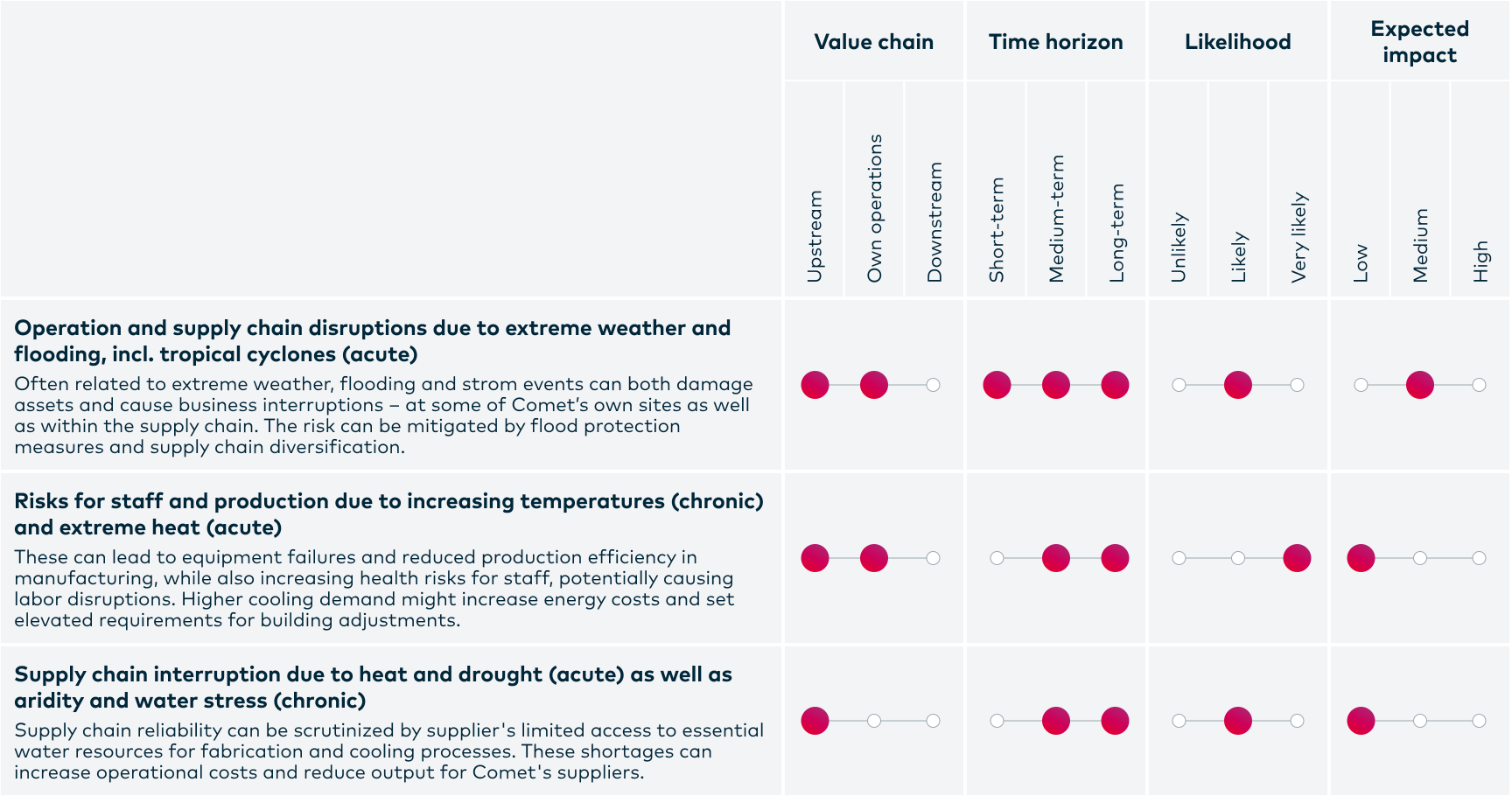
To strengthen the robustness of this conclusion, Comet has now initiated an evaluation of net risk, which incorporates the effectiveness of existing adaptation and mitigation measures across sites and operations. This next step will provide a clearer view of the company’s residual exposure and further support transparent, decision‑relevant climate risk reporting.
Overall, the assessment concludes that physical climate-related risks do not currently pose a financially material threat to the company. As part of the evaluation, Comet conducted a structured financial analysis to quantify potential impacts on assets, operations, and supply chains across key hazard categories on a gross risk basis.
As well, the existing analysis allows Comet to pinpoint and prioritize potentially exposed links in its value chain and prepare accordingly. For example, a regional hot spot in Southeast Asia was identified where tropical cyclones, storm surges and flooding pose a climate-related hazard risk to the company’s own operations and its suppliers. These insights are integrated into Comet’s supplier strategy and business resilience planning.
Climate-related transition risks
The 2025 dedicated physical climate risk assessment complemented the results of the 2024 workshop, in which the Sustainability Board analyzed and reassessed climate-related physical and transition risks and opportunities (see 2024 sustainability report for details). Together with the results of the climate risk assessment, climate risks were again reviewed in the Sustainability Board. While some minor adjustments were made to the assessed impact and probability of physical climate risks, the assessed impact and probability of transition risks and climate opportunities remain the same:
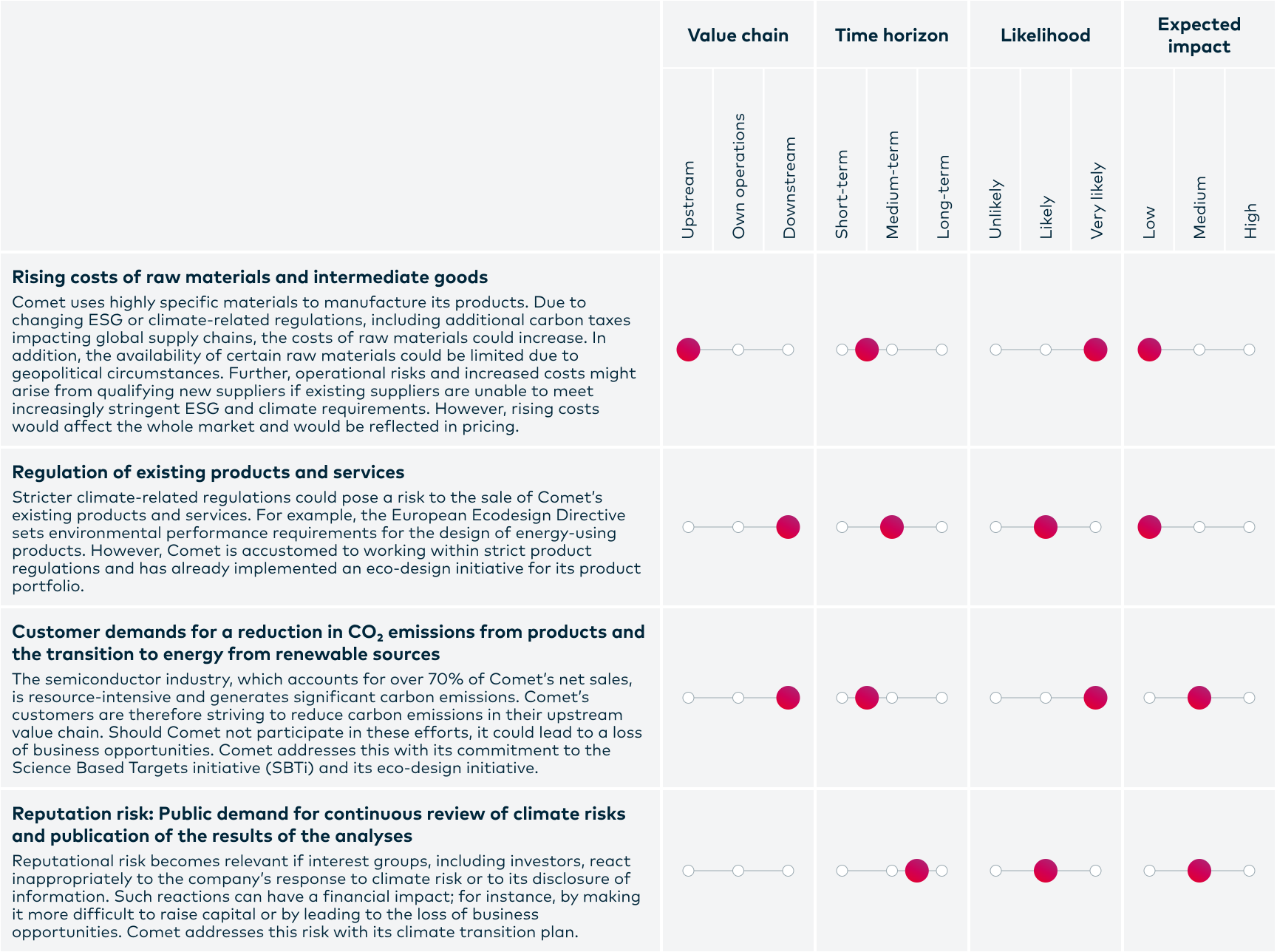
Similar to climate-related physical risks, climate-related transition risks do not pose a financially material threat to the company.
Climate-related opportunities
The successful adaptation to climate change and implementation of mitigation measures can also open up opportunities for Comet and positively impact our competitiveness. Two climate-related opportunities could potentially have a significant financial or strategic impact on the company:
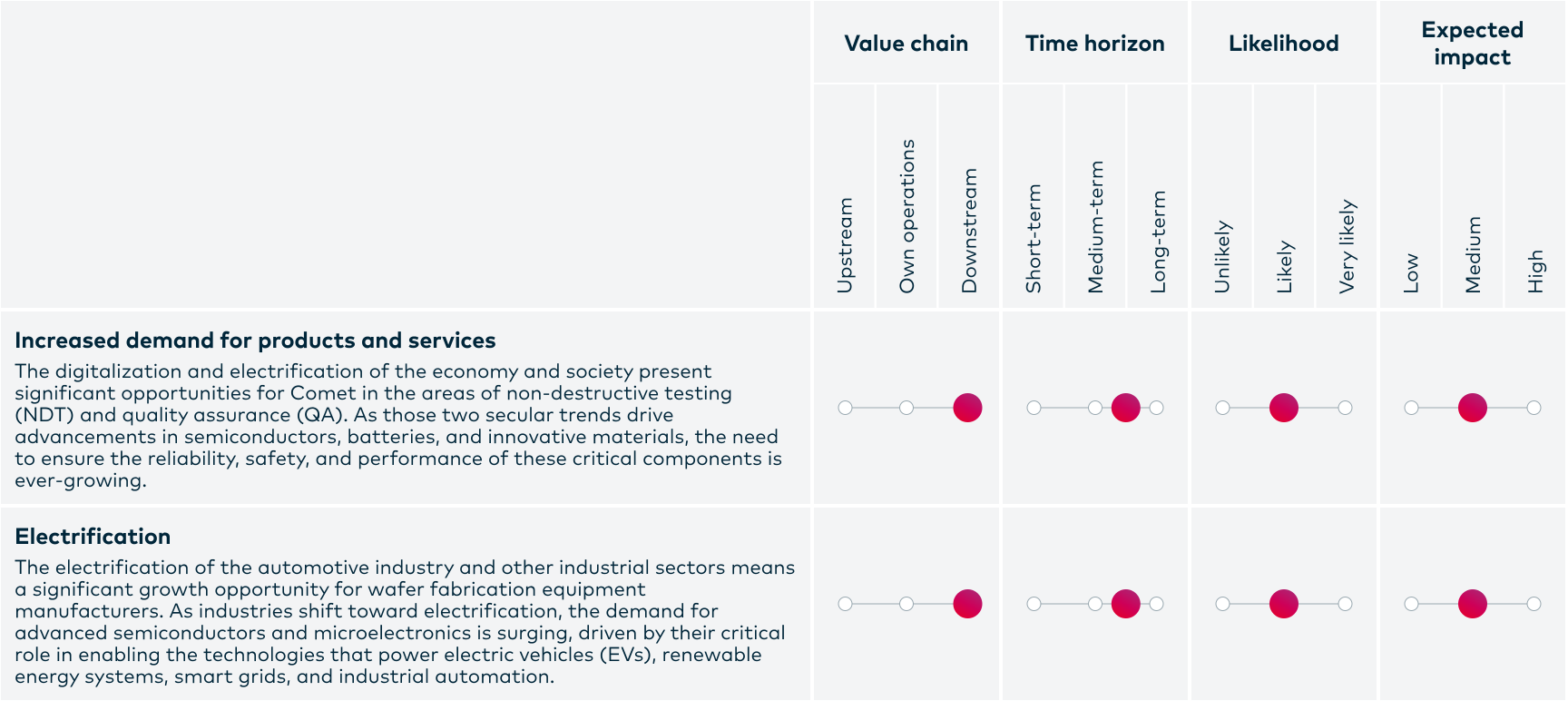
Climate change and the global energy transition are accelerating investments in electric vehicles, renewable energy, smart grids, and industrial automation. At the same time, rapidly progressing digitalization and electrification are driving rising demand for advanced semiconductors, batteries, and innovative materials, thus expanding opportunities in non-destructive testing (NDT), quality assurance (QA), and wafer fabrication equipment. Together, these trends increase the need for reliable, safe, and high-performance technologies to support decarbonization and climate resilience.
Climate-related opportunities identified for Comet remain predominantly long-term in nature, and their potential financial benefits are still subject to significant uncertainty.
Based on the currently assessed low likelihood of severe climate-related events, and considering our existing insurance coverage and other financial risk mitigation measures, we do not currently consider a detailed quantification of the anticipated financial effects of climate-related risks and opportunities to be necessary.
Business resilience
Our assessment of business model resilience to climate change is grounded in a comprehensive evaluation of both physical and transition risks. To understand how identified transition risks and opportunities may affect our future performance, we use climate scenarios to explore plausible future transition developments qualitatively. Consistent with our physical climate-related risk assessment, these scenarios reflect different pathways of greenhouse gas emissions and socioeconomic change, as defined above. In line with TCFD recommendations, we apply two selected scenarios to bound transition risks, to evaluate our ability to adapt and to test the robustness of our strategy under potential climate conditions:
- A “Sustainability” scenario (SSP1-2.6) forecasts rapid and collaborative global climate transition in alignment with the goals of the Paris Agreement and is thus deemed to represent the most challenging conditions for a successful climate transition for Comet.
- In a “Fossil-Fueled Development” scenario (SSP5-8.5), socioeconomic developments such as intensive fossil-fuel use jeopardize a timely transition to a climate-friendly economy, resulting in global warming of up to 4°C toward the end of the century. In such a scenario, physical risks are expected to be most significant, as environmental conditions would likely change drastically.
Based on our climate risk assessment, we do not consider our business model to be materially exposed or vulnerable to transition risks under a sustainability-oriented scenario, nor to physical risks under a high-warming scenario. Accordingly, we assess our business model as having strong resilience to potential changes in regulation, market dynamics, and technology, as well as to the increasing frequency and severity of climate-related hazards.