

Climate transition plan
Main drivers of emissions
In its own operations, Comet designs and manufactures high-precision radio-frequency (RF) and x-ray modules and systems at sites worldwide. Only a moderate amount of emissions comes from using fossil energy for production and building heating (Scope 1). The main internal contributor is the electricity needed to power sites and equipment, accounting for most operational emissions (Scope 2).
Scope 3 emissions arise across Comet’s value chain, which extends from the sourcing of specialized materials and components for RF power and x-ray technologies to the long-term use of these products in customers’ manufacturing and inspection processes.
Upstream, the company relies on a global network of suppliers for metals, electronics, vacuum components and capital goods. Purchased goods and services for manufacturing Comet’s products are the main source of emissions and account for the largest portion of the value chain footprint.
Downstream, Comet’s technologies enable critical steps in semiconductor fabrication and industrial x-ray inspection, and most value chain impacts therefore arise from the energy-intensive use of products at customer sites
Shipping processes also play a significant role. The transport of materials to Comet’s factories and of products to customers, including time-sensitive logistics, lead to additional emissions from these upstream and downstream activities.
Comet has a climate transition plan in line with Swiss law, including targets for greenhouse gas (GHG) emissions, specifying activities to reduce emissions within our own operations and across the entire value chain, as well as considering alternative approaches for transitioning to a low-carbon economy. The climate transition plan additionally addresses the mitigation of transition risks, which for many companies represent the primary climate risks, and considers seizing opportunities arising from a global climate transition. All aspects of the climate transition plan are detailed in this report. The TCFD index provides an overview of the content.
In 2025, Comet began to further develop this climate transition plan in line with the Transition Plan Taskforce (TPT) framework. As a first step, we launched a structured analysis of our decarbonization potential across Scopes 1, 2 and 3, identifying the main levers for emission reductions in our own operations, key supplier categories, transportation and the use of our products by customers.
Roadmap with SBTi-aligned targets
Comet committed to the Science Based Targets initiative (SBTi) at the end of 2024 and is now developing near-term science-based targets, which we plan to submit for validation in 2026. The objectives for Scope 1 and Scope 2 emissions are to align with a global reduction target to keep below a global warming of 1.5°C. Additionally, at least two-thirds of Scope 3 emissions are to be eliminated in line with the SBTi requirements to meet the well-below–2°C temperature target of the Paris Agreement.
The commitment to SBTi is intended to frame our existing short- and medium-term goals set out in our climate roadmap, including:
- Scope 1 emissions: Improve the energy efficiency at our production sites, supported by ISO 14001-based environmental management.
- Scope 2 emissions: Gradually increase the share of clean electricity, with the milestone of 100% by 2030 (market-based method)
- Scope 3 emissions: Drive emission reductions across the value chain through logistics optimization and structured engagement with key suppliers, while lowering customer emissions by integrating eco-design into R&D across all divisions.
Key impact mitigation concepts
To address the climate challenge, we have identified seven key drivers to reduce our carbon footprint across the entire value chain and incorporated them into our structured sustainability program, focusing on:
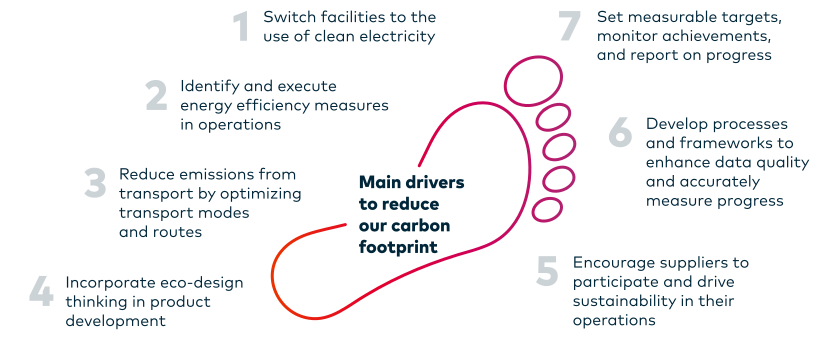

We seek to achieve an effective reduction of our indirect GHG emissions from the purchase of electricity by procuring it from providers that use low-emission technologies. “Clean electricity” as distinct from “renewable electricity” is our most preferred form of energy. This preference will be formally embedded in Comet’s purchasing policy in early 2026. The focus on clean electricity ensures that our efforts are outcome-oriented and directly aligned with achieving net-zero emissions. While renewable sources such as solar, wind, and hydropower are preferred options, we recognize that relying solely on renewables is not always feasible in every context. In such cases, we also regard other clean electricity sources as viable low-carbon options that support reductions in greenhouse gas emissions.

Improving energy efficiency requires identifying meaningful opportunities across operations. At Comet, we regularly assess our inventory of equipment, devices, and infrastructure to evaluate potential enhancements. These evaluations consider both environmental and economic factors, enabling us to implement viable replacements, upgrades, and renovations. Energy efficiency measures at the site level are part of the ISO 14001 targets, driven by the manufacturing sites (see “Aligning ISO 14001 certification with ESG").

Where feasible, Comet aims to reduce emissions from transportation in its supply chain by switching to lower-carbon transportation methods and optimizing routes with its logistics partners. Additionally, we are exploring ways to regionalize our supply chains, which would shorten transport routes and further reduce emissions. We have already achieved initial success by making the supply chain for our growing Asia hub in Penang, Malaysia, more regional. The significant reduction in shipping distances highlights how focused efforts can yield both environmental and operational advantages, serving as a blueprint for future initiatives across our global operations.

Comet’s eco-design initiative, launched in 2023, focuses on enhancing the environmental performance of our products. As part of this effort, we conducted pilot projects and gathered ideas to improve energy efficiency and reduce the environmental impact of our offerings. Insights from these efforts reveal that our products offer meaningful potential for emission reductions, particularly through the sourcing and selection of raw materials for production and during the use phase at our customers, such as by optimizing standby modes. Building on these findings, we are systematically integrating eco-design principles and lessons learned into our R&D processes to ensure that sustainability remains an important element in future product development.

A key element of reducing Comet’s climate impacts is the fostering of strong relationships with our suppliers. In 2026, we will launch a phased approach of first identifying areas where collaboration with our suppliers can achieve meaningful reductions in greenhouse gas emissions.

Accurate and consistent data collection, analysis, and interpretation are fundamental to understanding our environmental impacts and are the prerequisite for successfully identifying potential improvements. Through rigorous data analysis, we can identify trends, evaluate the effectiveness of current initiatives, and ensure alignment with our long-term sustainability goals. Reliable data also supports transparency and accountability, enabling us to communicate our progress to stakeholders with confidence. By embedding a systematic approach to data management in our sustainability strategy, we ensure that our efforts are not only measurable but also scalable, paving the way for continuous improvement and lasting impact.

Effective progress toward achieving net-zero GHG emissions requires ambitious objectives. We strive to update and expand our existing set of targets and to develop reliable and efficient monitoring processes. Transparent reporting of our progress promotes a strong and trusted Comet brand.
Eco-design as a key initiative to reduce Comet’s carbon footprint
In 2025, Comet further advanced the integration of eco-design principles into its product development. Following the completion of the pilot project in the remaining division, all divisions have now applied eco-design and life cycle assessment (LCA) practices to guide product improvements.
The focus remained on reducing environmental impacts associated with material sourcing and product use (Scope 3 categories 1 and 11). Improvement proposals have been developed for these two areas. The next step involves implementing the possible measures, which range from optimizing standby modes and reusing components to sourcing alternative materials. Building on the results of the pilot projects, eco-design principles are now being integrated into the development processes within the R&D departments, involving both Comet’s Chief Technology Officer and the Global R&D Heads of the three divisions.